Tip · Around three hours or less by road, take a minivan or bus. Overnight distance on a railway line, take the sleeper train. Anything longer with no night train, fly. Book the sleeper early; everything else can wait.
The question I get most from friends planning a trip is not where to go but how to get between the places they've picked. Train or flight to Chiang Mai? Is the minivan to Hua Hin fine? Is the overnight bus to Krabi a false economy? After years of doing these legs myself, the answer has settled into a simple rule, and this guide is that rule with the reasoning behind it. The Bangkok basics are at the top, the island ferries and the motorbike question at the bottom.
Bangkok: getting around the city
The biggest transport mistake first-timers make in Bangkok is taking taxis during rush hour, when the Skytrain would have been twice as fast. I almost never take a taxi in Bangkok. The BTS is faster, cheaper, and you don't sit in traffic.
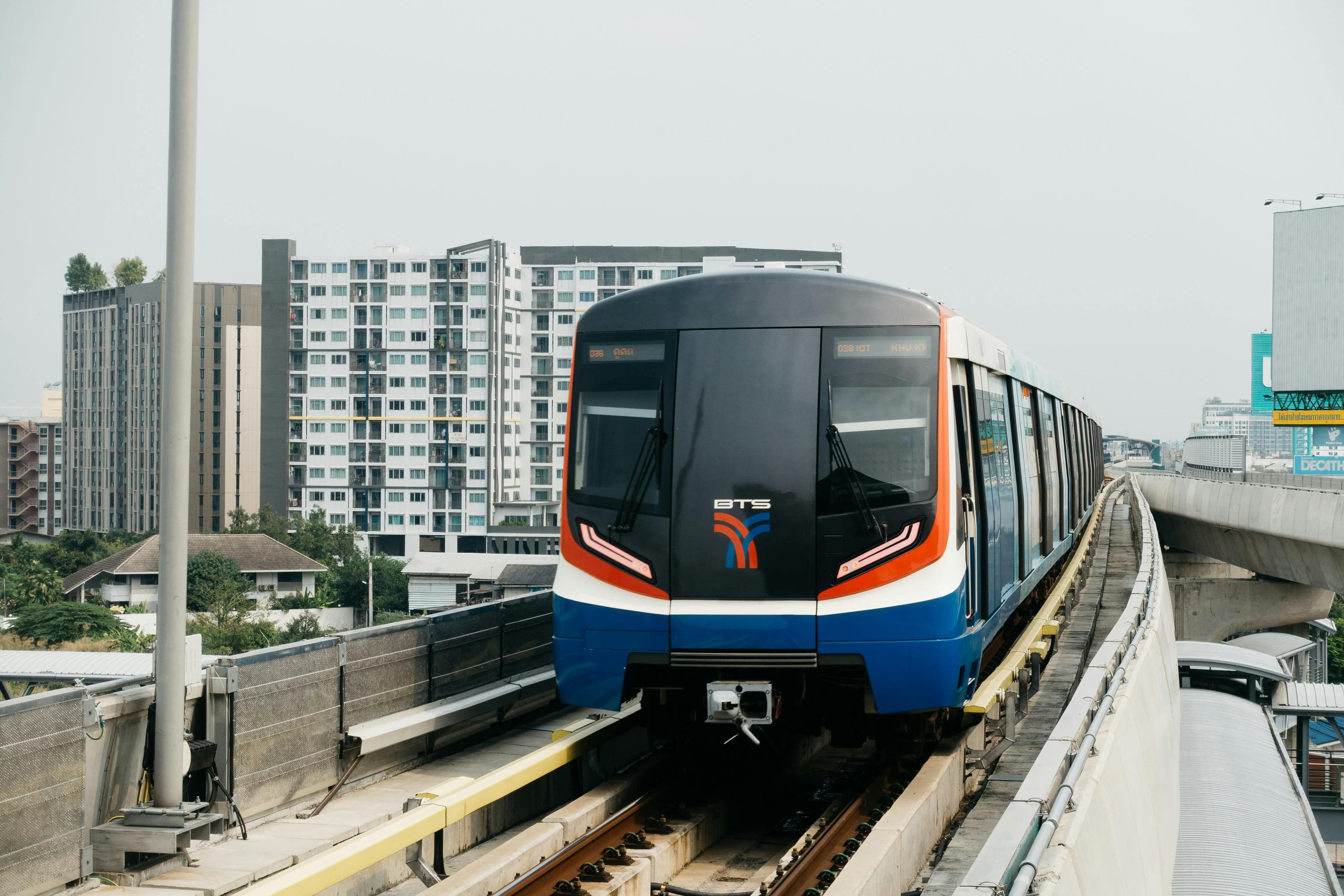
BTS Skytrain is the fastest way to move around central Bangkok. Two main lines (Sukhumvit and Silom) cover most tourist and business areas. Fares run from 17 to 65 THB depending on distance, and most central trips are under 50. Buy a Rabbit Card at any ticket window for easy top-ups, because the BTS gates still don't take foreign contactless bank cards. The 20-baht flat fare you'll read about is for Thai ID holders only.
MRT Subway complements the BTS with additional coverage, including the Chatuchak market area, Chinatown, and the riverside. The two systems intersect at several interchange stations, but they are separate systems with separate tickets. The MRT is the opposite of the BTS on payment: tap a contactless Visa or Mastercard at the gate, and the Rabbit Card doesn't work there.
Chao Phraya Express Boat runs along the river and is one of the more pleasant ways to travel between the Grand Palace area, Chinatown, and the upper riverside. Much cheaper than a taxi. Since 2026 the orange-flag boat only runs in weekday rush hours; the rest of the day and at weekends the yellow-flag boat covers the same tourist piers for about the same fare. The blue-flag tourist boat costs more and is for hopping on and off.
Grab works well for trips that are not well-served by rail. Set the destination in-app, confirm the price, and wait somewhere a car can actually stop. The Grab guide covers the pickup problem and the ride tiers. Metered taxis are also reliable in Bangkok if you insist on the meter.
Tuk-tuks are fun for short distances and a quintessential Bangkok experience, but always agree on a price before you get in. They are not metered.
Between cities: how I pick for each leg
The rule I use, in order:
- Around three hours or less by road, take a minivan or a bus. Kanchanaburi, Pattaya, Ban Phe for Koh Samet, Pai from Chiang Mai, and Hua Hin at the long end of the range. A flight can't compete on a leg this short once you add the airport at each end. Ayutthaya is the exception: the train beats the minivan there on time and price.
- Overnight distance on a railway line, take the sleeper train. Bangkok to Chiang Mai, Bangkok to Surat Thani for the Gulf islands, Bangkok to Hat Yai. You lose no daylight and save a hotel night.
- Anything longer than that with no night train, fly. Bangkok to Phuket or Krabi, Chiang Mai to anywhere in the south, and any leg where the alternative is an eight-hour-plus bus in daylight. Where there's no flight (Sukhothai, Chiang Rai from Chiang Mai), or only an expensive one (Koh Chang, via Trat), it's the big bus.
The one exception is a leg where the overnight bus is much cheaper than the flight and you're travelling light. I cover that below, but it is an exception, not the default.
Flights: fast, cheap in advance, and the airport eats the saving
Domestic flights in Thailand are short and, booked a few weeks out, often cheaper than the hotel you'll sleep in that night. Bangkok to Chiang Mai, Krabi or Phuket is an hour and a quarter to an hour and a half in the air, and fares of 1,000–2,000 THB one way are normal outside Thai holidays. Nok Air and Thai Lion Air fly from Don Mueang, and so does most of AirAsia, though from October 2026 AirAsia also runs Chiang Mai, Phuket and Krabi flights out of Suvarnabhumi. Thai Airways, Thai Vietjet and Bangkok Airways fly from Suvarnabhumi. Bangkok Airways owns the Koh Samui airport, which is why Samui flights cost two to three times what a Surat Thani flight does.
Three things people get wrong:
- The door-to-door time is not the flight time. An hour and a quarter in the air is four to five hours door to door once you count the ride to the airport, being there two hours ahead (which is what Don Mueang's queues actually need), the taxi from the arrival airport and finding the hotel. That is why a flight loses to a minivan on a three-hour road leg and wins on a twelve-hour one.
- Read the airport code on your ticket, not the airline name. Don Mueang is on the other side of the city from Suvarnabhumi, about 45 km by road. If you land at Suvarnabhumi on an international flight and your domestic flight leaves from Don Mueang, that connection is a road transfer of 60–90 minutes, longer in rush hour, not a walk. The airports guide has the airline-by-airport split.
- The cheap fare is for 7 kg of cabin baggage. The cheapest fare on every low-cost carrier is cabin bag only, usually a bag plus a small personal item weighed together (Thai Lion Air's middle fare includes a 15 kg bag; the others sell it separately). A 20 kg bag added at booking is roughly 400–660 THB; the same bag at the check-in desk is 900 on AirAsia and a lot more on Nok Air, and you can't add it online in the last few hours before the flight. Add it when you book.
I book flights direct with the airline rather than through an agent or a comparison site. The fares are the same and changing a booking is far easier.
Sleeper trains: the best night you'll spend in transit
The overnight train is one of my favourite things about travelling in Thailand, and on the legs a first trip uses it beats the flight on everything except speed. You board in the evening at Krung Thep Aphiwat, Bangkok's main long-distance station (it replaced Hua Lamphong for these routes in 2023), eat something, sleep, and wake up in the hills outside Chiang Mai or the flat green south. You save a hotel night and lose no daylight. There are also sleepers to Nong Khai for Laos and to Ubon Ratchathani, if your trip goes that way.
Bangkok to Chiang Mai takes about 12–13 hours. Book the second class air-conditioned sleeper and ask for a lower berth. It is wider, and it is the one that sells out first. Expect to pay about 1,050 THB on train 9 (the newer carriages) or about 850 on the older train 13. First class is a two-berth cabin at roughly 1,450–1,650 THB per person when two of you share it, or about 2,450 on your own. Worth it for a couple who want the door to close, not otherwise. Once you're there, things to do in Chiang Mai covers where to stay and the day trips I'd pick.
Bangkok to Surat Thani is the train for Koh Samui, Koh Phangan and Koh Tao. Book train 85 (leaves 19:50, arrives 06:23), which is the one timed for the morning boats; a couple of the other night trains put you on the platform at 2am. Ten and a half to eleven hours, same classes, and the station is at Phun Phin, a 20-minute ride outside Surat Thani town, where the agents in the car park sell combined bus-and-ferry tickets to the islands from 05:30. Bangkok to Hat Yai is the same idea for the deep south and the Malaysian border.
The catch is availability. Berths go on sale 90 days before departure, at 08:30 Thai time (the State Railway cut it from 180 days in April 2026), and the good trains around weekends and Thai holidays sell out weeks ahead, the lower berths on train 9 sometimes within hours. This is the one transport booking I make early, even when I'm leaving the hotels open. Book direct on the State Railway's D-Ticket site, where foreign cards sometimes fail the payment check, or on 12Go, which adds roughly 150–250 THB a ticket but works without the fuss.
Bring your own water and something to eat. Food is sold on board but it is not the point of the trip. A light jumper helps, because the air conditioning is set for Thais who find 24 degrees cold.
Day trains for short hops are a different thing and don't need booking, but they don't all leave from the same station. The best way to Ayutthaya is a rapid train from Krung Thep Aphiwat: a little over an hour, and third class is still about 20 THB. The ordinary trains from Hua Lamphong cost the same but take two hours, and the first one after dawn leaves at 10:15. The Kanchanaburi line leaves from Thonburi station on the west bank twice a day, at 07:45 and 13:55, about two and a half hours for a flat 100 THB foreigner fare. The slow trains to Phetchaburi and Hua Hin leave from Thonburi and Hua Lamphong and take about four hours; the one fast day train from Krung Thep Aphiwat (Special Express 43 at 07:30) does Hua Hin in three and is worth booking a few days ahead. The north-eastern line drops you at Pak Chong for Khao Yai in under three hours on the morning express. Slow, cheap, windows open, and better than the minivan whenever you're not in a hurry.
Buses: the honest middle option
Long-distance buses in Thailand are better than their reputation. The government-run Transport Co. (บขส., "Bor Kor Sor" on the signs) and the big private operators run air-conditioned coaches with reclining seats, and the VIP classes have 24 or 32 seats instead of 40-odd. Nakhonchai Air is my pick for the north and Isaan, Sombat Tour for the north and the Surat Thani side, and the overnight Krabi and Phuket runs are mostly Lignite Tour. Note that Nakhonchai Air and Sombat Tour leave from their own terminals on Vibhavadi Rangsit Road near Chatuchak, not from Mo Chit; the ticket tells you which.
Bangkok has three long-distance terminals and picking the right one matters:
- Mo Chit (Northern Bus Terminal) mainly for the north and north-east: Chiang Mai, Chiang Rai, Sukhothai, Khao Yai, Isaan. It is a Grab ride from Mo Chit BTS, not next to it.
- Sai Tai Mai (Southern Bus Terminal) for the west and south: Kanchanaburi, Hua Hin, Krabi, Phuket, Surat Thani.
- Ekkamai (Eastern Bus Terminal) for the east coast: Pattaya, Ban Phe for Koh Samet, Trat for Koh Chang. This one is at the bottom of the stairs from Ekkamai BTS, exit 2.
Where a bus is the right call: Chiang Mai to Chiang Rai (Green Bus, about three and a half hours, no railway), Bangkok to Sukhothai (no railway) and Koh Chang (five to six hours on the bus from Ekkamai to the Trat piers, then the car ferry, so six to seven and a half hours door to door, no train), and the overnight VIP bus to Krabi or Phuket when flights are expensive. That last one is 11–14 hours and 600–1,100 THB. I'd only do it if the flight was over 3,000 THB, I had no checked bag to worry about, and I could sleep sitting up.
The overnight bus to Chiang Mai (roughly 10 hours, 500–900 THB) exists and is fine, but the VIP bus and the train cost about the same on this leg and the train gives you a bed. Take the train unless it's sold out.
Minivans: great under three hours, grim over it
Minivans are 13-seat Toyota Commuters that leave from the same three terminals and from most provincial towns. For a two-to-three-hour leg they are the best option: cheap, frequent, and faster than the bus because they take the motorway and skip the towns. Bangkok to Kanchanaburi, Pattaya or Hua Hin, Chiang Mai to Pai, Krabi to Koh Lanta, all minivan legs.
The honest case against them for anything longer:
- The seats are sized for a smaller person than you, there is one aisle, and your bag rides on your lap or in the gap behind the back row. A big backpack means paying for a second seat on some routes.
- They leave when they're full or when the schedule says, whichever comes second, and they pick up passengers on the way out of town.
- The driving is faster than you'd like. On a winding road (Chiang Mai to Pai has 762 bends and a reputation for motion sickness) sit near the front and don't eat first.
So: three hours, yes. Six hours, take the bus or the train. Ten hours, fly.
The tourist bus from Khao San: skip it
The combined bus-and-ferry tickets sold by the travel agents on Khao San Road and the tourist streets are the exception to "buses are fine". They use older coaches from a car park rather than a terminal, and the theft-from-bags stories are old but not gone. Any overnight bus to Koh Tao puts you on the Chumphon pier around 5am for a 7am boat, so that part you get either way; the difference is who's running the coach. The government bus from Sai Tai Mai, or the train to Surat Thani, does the same leg for about the same money and is a different experience.
The one combination ticket that is fine is one sold by the ferry company itself. Lomprayah's bus-and-catamaran package from Bangkok to Koh Tao, Phangan and Samui leaves from its own office on Rambuttri Road (yes, the street behind Khao San) or from the old Southern Bus Terminal at Pinklao, and uses its own coaches to its own pier at Chumphon. That is an operator's product, not a travel agent's bundle.
Booking: the agencies on the tourist streets are the wrong shop
Everything between cities in Thailand is easy to book from your phone, and doing it yourself means you pick the departure time rather than the one that suits the operator. Flights direct with the airline. The sleeper train direct with the State Railway or on 12Go. Buses and ferries on 12Go, because it shows every operator on the route side by side, takes foreign cards, and the ticket arrives by email. Minivans on short legs I just turn up for.
The travel agency on the tourist street will sell you a bundle, and it is nearly always the wrong bundle at the wrong price. Not a scam, just the worst version of each leg with a margin on top.
The common legs, and what I'd take
| Leg | My pick | Why |
|---|---|---|
| Bangkok to Chiang Mai | Sleeper train | Bed, no lost day, about the same price as the VIP bus |
| Bangkok to Phuket or Krabi | Fly | 11–14 hours by road, flight is under an hour and a half |
| Bangkok to Koh Samui | Fly to Surat Thani, then bus and ferry | Samui airport fares are two to three times higher, but the bus and ferry from Surat Thani airport is another three to five hours; if the gap is under about 2,000 baht, fly to Samui |
| Bangkok to Koh Tao or Phangan | Sleeper train 85 to Surat Thani, or Lomprayah from Bangkok | Both arrive for the morning boats |
| Bangkok to Ayutthaya | Rapid train from Krung Thep Aphiwat | A little over an hour, about 20 THB in third class |
| Bangkok to Kanchanaburi, Pattaya, Hua Hin | Minivan, or the day train if not in a hurry | Two to four hours; Hua Hin is the long one at three and a half either way |
| Bangkok to Koh Samet or Koh Chang | Bus or minivan from Ekkamai, then a ferry | Four to five and a half hours to Samet, six to seven and a half to Koh Chang, door to door, no train |
| Chiang Mai to Chiang Rai | Green Bus | Three and a half hours, no railway |
| Chiang Mai to Pai | Minivan | Three to three and a half hours, front seat, no breakfast |
| Chiang Mai to the south | Fly | Direct to Phuket, Krabi and Surat Thani on AirAsia; anywhere else via Bangkok |
| Krabi to Koh Lanta | Minivan | Two and a half to three hours including the short car ferry onto Lanta Noi; the queue adds an hour in December and January |
| Phuket to Krabi | Minivan | About three hours by road |
| Koh Samui to Krabi | Ferry and bus via Surat Thani | Five to seven hours, book as one ticket |
Getting to the islands
Surat Thani is the mainland hub for the Gulf islands. The car ferries to Koh Samui (Raja and Seatran, about an hour and a half) leave from the piers around Donsak, about an hour east of the town; Lomprayah's catamaran does it in about an hour from its own pier, a couple of times a day. The train station and the airport both have agents selling combined bus-and-ferry tickets. Koh Tao is also reachable from Chumphon further north, which is the shorter crossing.
Krabi and Phuket are the departure points for boats to Koh Lanta, Koh Phi Phi and the Andaman islands. Ferry services vary by season, and several routes only run from November to April. The rest of the year the same trip is a road transfer. Koh Yao Yai sits between the two, with speedboats from Bang Rong pier on Phuket and from the Krabi side, so it works as a stop between them rather than a detour.
Koh Chang in the east is reached from Trat: a one-hour Bangkok Airways flight (two a day, and pricey) or a five-to-six-hour bus from Bangkok, then a 30 to 45 minute car ferry. Koh Samet is a bus to Ban Phe and a 40-minute ferry.
Ferries in the wrong season get cancelled. The Andaman side is rough from May to October and the Gulf side from October into early January, worst in November, so if you're travelling then, don't book a flight home for the morning after a crossing. The November weather page has the sea conditions for both coasts.
Booking the ferry and bus as one operator ticket is cheaper than buying each leg separately. Doing it on 12Go costs a small fee more than the pier but saves the queue and gets you a seat on a busy day.
Renting a motorbike
Renting a motorbike is common in resort areas like Chiang Mai, Phuket, Pai, and the islands. It gives you independence that no taxi app can match.
That said: Thai roads have a significantly higher accident rate than in most Western countries, and many travel insurance policies do not cover motorbike accidents unless you hold a valid licence for the vehicle class. To ride legally you need your home licence with a motorcycle entitlement on it plus an International Driving Permit with the motorcycle category, sorted out before you fly. Helmets are compulsory for rider and passenger, and the fine is now 2,000 baht each. Check your policy before you rent.
Trip planner
Turn this into a day-by-day plan.
Pick your dates and the free trip planner shows the seasonal weather verdict for every region, then lets you build the route one stop at a time.
Book transport
Trains, buses & ferries
Compare schedules, prices, and operators across Thailand on 12Go.