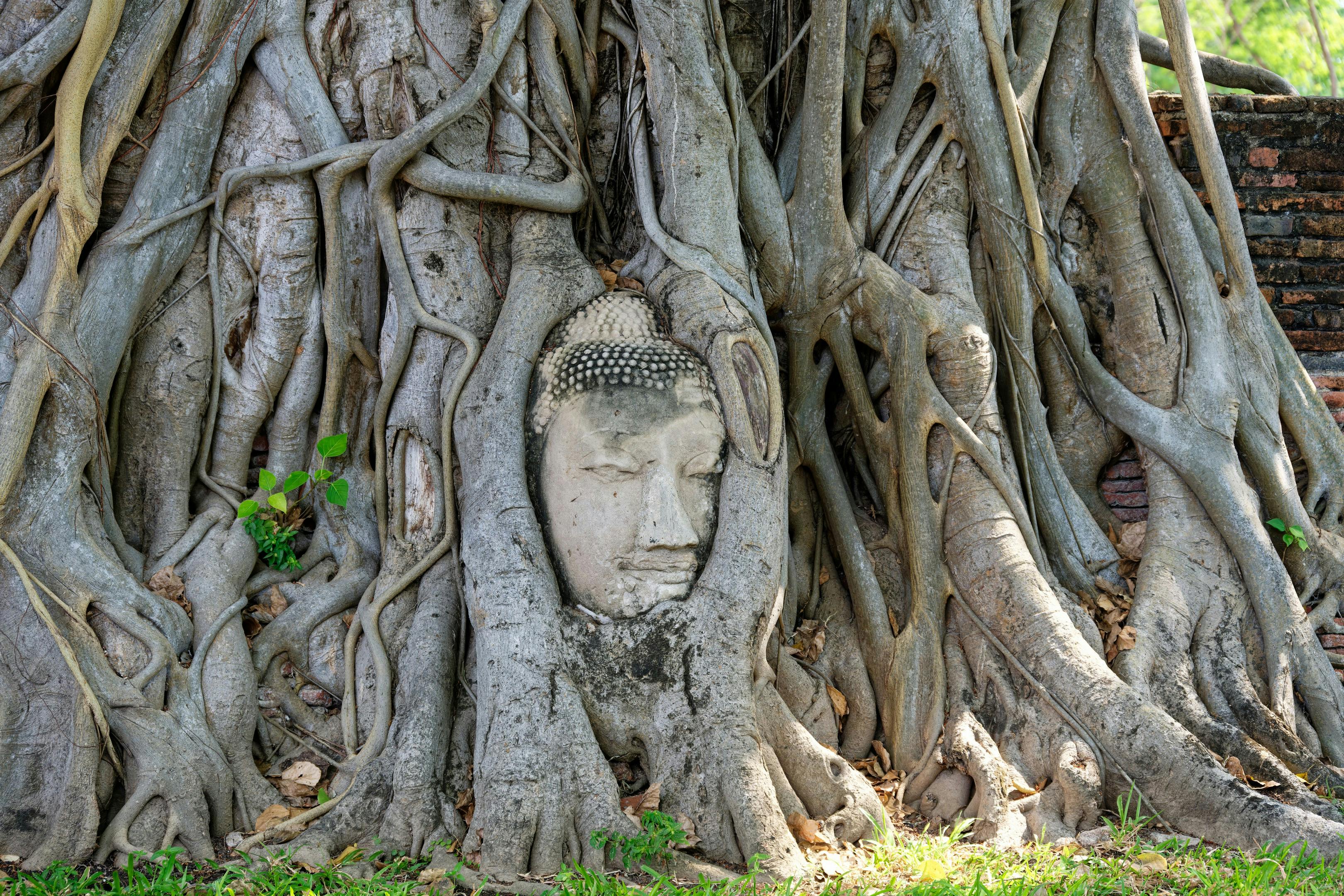
Ayutthaya is a historic city about 80 km north of Bangkok. It was the capital of the Kingdom of Siam from 1350 until the city was sacked in 1767, and at its height was one of the largest and most cosmopolitan cities in the world. Its historic centre sits on an island formed by the confluence of three rivers, the Chao Phraya, the Lopburi, and the Pa Sak.
The brick temple ruins on and around the island make up the Ayutthaya Historical Park, a UNESCO World Heritage Site. It is one of the most popular day trips from Bangkok, though staying overnight lets you see the ruins at sunrise and sunset without the tour crowds. The modern town wraps around the historic core, with the railway station just across the Pa Sak River to the east.
Getting there
Ayutthaya is an easy trip north from Bangkok, most often done as a day trip but with plenty of accommodation for an overnight stay. There is no airport; international visitors arrive via Bangkok.
From Bangkok
Train
1.5–2hFrequent services run from Bangkok (Krung Thep Aphiwat Central Terminal, and some from the old Hua Lamphong) to Ayutthaya station. The cheapest and most scenic option.
Check schedules on 12Go →Minivan / bus
1.5–2hMinivans and buses depart Bangkok's Mo Chit and Northern terminals throughout the day.
Check schedules on 12Go →Private car / tour
~1.5hMany visitors come on an organised day tour or by private car, often combined with the Bang Pa-In Royal Palace to the south.
Check schedules on 12Go →
The nearest airport is Bangkok's, about an hour and a half to the south. Ayutthaya sits on the main northern rail line, so it is also an easy stop between Bangkok and Chiang Mai.
Weather by season
Ayutthaya shares the central-plains climate: hot and humid year-round, with a cooler dry season from November to February, a hot season from March to May, and a wet season from June to October. Being open and shadeless, the ruins are hard going in the midday heat of the hot season.
Year-round climate
Jan
Feb
Mar
Apr
May
Jun
Jul
Aug
Sep
Oct
Nov
Dec
Conditions by month
Seasonal averages for the Central Thailand. Tap through to the monthly weather guide for detail.
Cool & dry
Nov–FebThe best time to explore the ruins, with lower humidity and daytime highs in the low 30s Celsius.
Hot season
Mar–MayThe hottest months, often above 35°C, with little shade among the temples. Early mornings and late afternoons are far more comfortable than midday.
Green season
Jun–OctThe monsoon brings afternoon downpours and greener surroundings. Ayutthaya sits on floodplains and can be affected by seasonal flooding in the heaviest years, usually around October.
Trip planner
Planning Ayutthaya? See which days suit it.
The free trip planner shows the seasonal weather verdict for Ayutthaya on your dates, how long it takes to get there from your other stops, and where to book.
Where to stay
Where to stay
Where to stay in Ayutthaya
The historic island holds the ruins and the guesthouse cluster; quieter riverfront stays and the railway station ring its edges. Tap an area to see where it is.
Old Town (Naresuan Road)
On the island, walkableBest for: Budget guesthouses near the ruins
The northeast of the historic island, around Naresuan Road and Soi 2, is the main guesthouse and backpacker cluster: inexpensive rooms, cafes, rental shops, and a night market, all within cycling distance of the central temples.
On the map
- Wat Mahathat
- Wat Ratchaburana
- Naresuan Rd (guesthouses)
Hotels to shortlist
Baan Tye Wang Guesthouse Budget
Central, near the night market.
Tony's Place Budget
Long-running traveller guesthouse.
Classic Kameo Hotel Mid-range
Larger business-style hotel.
Agoda · Affiliate link
Getting around
The historic park is spread out and mostly flat. Rented bicycles, which most guesthouses provide, and motorbikes are the usual way to move between temples; tuk-tuks can be hired by the hour or the day to tour the ruins. A small cross-river ferry links the island to the railway station on the east bank.
Some of the finest ruins, including Wat Chaiwatthanaram, sit across the rivers outside the island and are reached by bridge or by boat. Longtail-boat tours circle the island and take in the riverside temples, a popular option in the late afternoon.
Things to do
- Wat Mahathat. Known for the stone Buddha head entwined in the roots of a fig tree, one of Thailand's most recognisable images.
- Wat Phra Si Sanphet. The former royal temple on the palace grounds, with three restored bell-shaped chedis.
- Wat Chaiwatthanaram. A large riverside temple southwest of the island, especially photogenic at sunset.
- Wat Ratchaburana. A well-preserved prang (tower) whose crypt can be entered.
- Bang Pa-In Royal Palace. A summer palace complex about 20 km south, often combined with an Ayutthaya visit.
Local character & practical notes
At its height Ayutthaya traded with China, Japan, Persia, and Europe, and its ruins mix Khmer-influenced and distinctly Ayutthayan styles. Some temples were built by, or for, foreign communities that lived around the city.
The ruins are active heritage and religious sites. Modest dress is expected, and climbing on the structures is prohibited at many of them. Several temples are floodlit in the evening.
The main temples charge a small entrance fee, and a combined ticket covers the principal sites. The town has a lively night market near Naresuan Road and riverside restaurants popular in the evening.
Going deeper
Opinion & first-hand guides to Ayutthaya
This page keeps to the facts. For recommendations and first-hand takes, these blog posts go further.