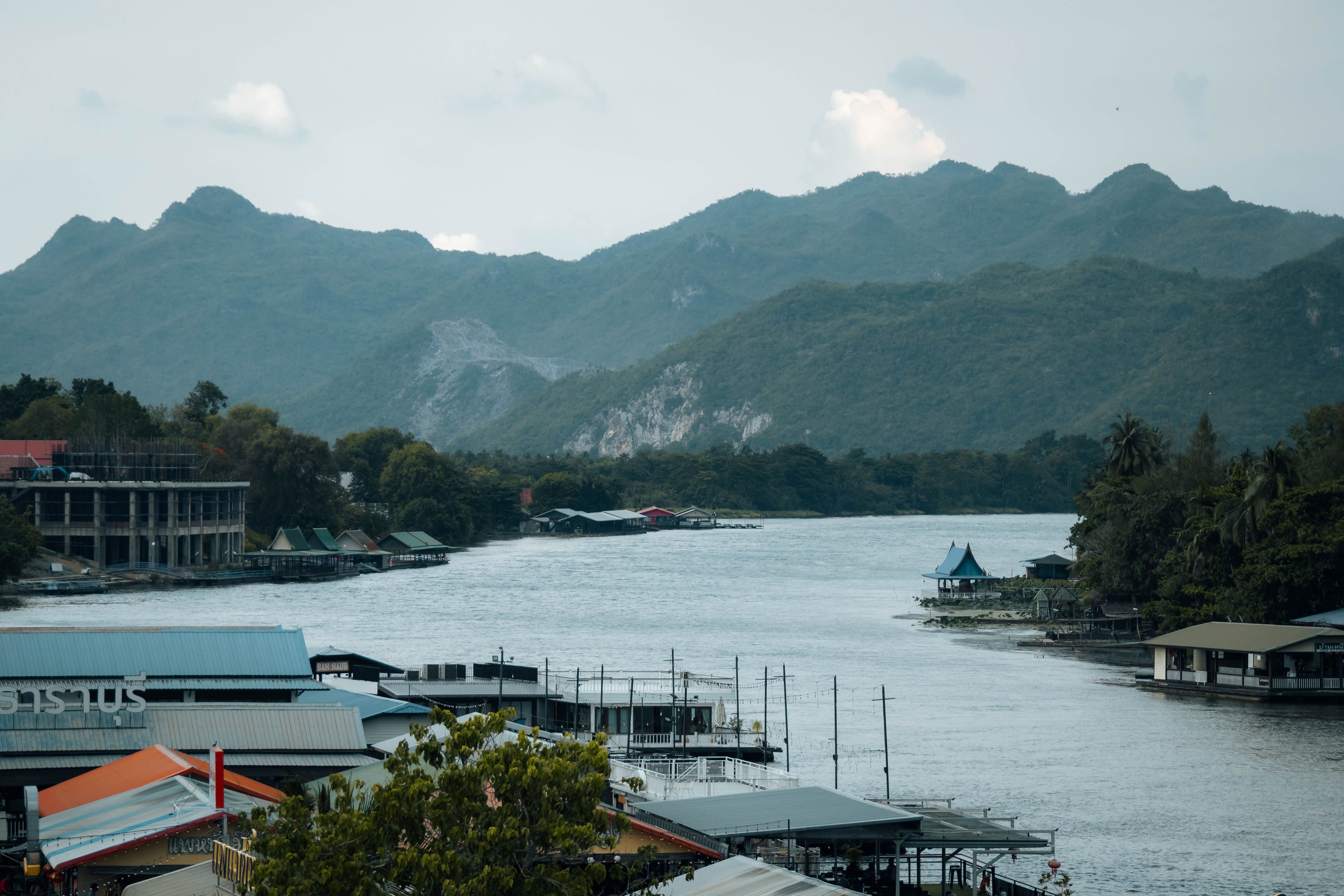
Kanchanaburi is a provincial capital about 130 km northwest of Bangkok, at the point where the Khwae Noi and Khwae Yai rivers join to form the Mae Klong. It is best known for the Bridge over the River Kwai and the Thailand-Burma 'Death Railway' built by Allied prisoners of war and Asian forced labourers during the Second World War, commemorated in several museums and war cemeteries in and around the town.
Beyond the wartime history, Kanchanaburi province is one of Thailand's greenest, with two major national parks within reach of town. Erawan National Park, with its seven-tiered waterfall, is the most visited. The town itself sits along the river, with much of its accommodation on or facing the water, including guesthouses built on floating rafts.
Getting there
Kanchanaburi is reached overland from Bangkok. There is no airport; international visitors arrive via Bangkok and continue by road or rail.
From Bangkok
Bus / minivan
2–3hBuses and minivans run from the Southern Bus Terminal (Sai Tai Mai) throughout the day. The fastest and most frequent option.
Check schedules on 12Go →Train
~2.5hTwo trains a day run from Bangkok's Thonburi station to Kanchanaburi and continue along the historic Death Railway line toward Nam Tok. Slow, cheap, and scenic.
Check schedules on 12Go →Private car / tour
~2hDay tours from Bangkok typically combine the bridge, a museum, and Erawan or a train ride on the railway. A private car gives more control over timing.
Check schedules on 12Go →
The nearest airports are Bangkok's, about two hours to the east. Kanchanaburi is also a stop on some overland routes toward the Myanmar border at Phu Nam Ron.
Weather by season
Kanchanaburi shares the central-plains pattern: a cooler dry season from November to February, a hot season from March to May, and a wet season from June to October. The waterfalls in the national parks carry the most water late in the wet season, while river levels and trail conditions are easiest in the dry months.
Year-round climate
Jan
Feb
Mar
Apr
May
Jun
Jul
Aug
Sep
Oct
Nov
Dec
Conditions by month
Seasonal averages for the Central Thailand. Tap through to the monthly weather guide for detail.
Cool & dry
Nov–FebThe most comfortable months for the town, the railway, and hiking in the parks, with lower humidity and cooler nights.
Hot season
Mar–MayThe hottest months, regularly above 35°C inland. Waterfall pools are at their lowest but the swimming is welcome.
Green season
Jun–OctAfternoon downpours and full rivers. Erawan and the other waterfalls are at their most impressive from August to October, though trails can be slippery.
Trip planner
Planning Kanchanaburi? See which days suit it.
The free trip planner shows the seasonal weather verdict for Kanchanaburi on your dates, how long it takes to get there from your other stops, and where to book.
Where to stay
Where to stay
Where to stay in Kanchanaburi
Accommodation follows the river: the guesthouse strip along Maenam Kwai Road, the area near the bridge, and the town centre by the market and station. Tap an area to see where it is.
Bridge area
North of town, by the riverBest for: Resorts near the main sight
The area around the Bridge over the River Kwai, at the northern edge of town. Larger riverside resorts and restaurants cluster here, a short ride from the guesthouse strip and the museums.
On the map
- Bridge over the River Kwai
Hotels to shortlist
The FloatHouse River Kwai Splurge
Floating villas upriver from town.
Dheva Mantra Resort Mid-range
Large riverside resort near the bridge.
Baan Sophia Budget
Simple rooms near the bridge.
Agoda · Affiliate link
Getting around
The town itself is manageable by bicycle or motorbike, both widely rented along Maenam Kwai Road. Songthaews run fixed routes through town, and motorbike taxis wait near the market and bus station.
The sights outside town are spread out. Public songthaews run from the bus station to Erawan National Park (about 1.5 hours), and the Death Railway line continues from town to Nam Tok, passing over the Wang Pho viaduct. Hellfire Pass, Sai Yok, and the further parks are easiest with a rented motorbike, a hired driver, or a tour.
Things to do
- Bridge over the River Kwai. The wartime railway bridge at the north of town, walkable on foot between train crossings.
- Thailand-Burma Railway Centre. A museum documenting the railway's construction and human cost, next to the Kanchanaburi War Cemetery.
- Erawan National Park. A seven-tiered waterfall 65 km north of town, with swimming pools at most levels. The upper tiers require a forest hike.
- Hellfire Pass. A rock cutting dug by prisoners of war, 80 km northwest, with a memorial museum maintained by the Australian government. Free admission.
- Death Railway train ride. The line from Kanchanaburi to Nam Tok crosses the Wang Pho viaduct along a cliff face above the Khwae Noi.
Local character & practical notes
Kanchanaburi is a mid-sized provincial town that hosts a steady flow of both Thai and foreign visitors, but at a much lower intensity than the islands. Evenings centre on the night market and the riverside restaurants, some of them floating.
The war sites are cemeteries and memorials as well as attractions. Around 100,000 people died building the railway, the majority of them Asian labourers. Modest behaviour is expected at the cemeteries and museums.
Raft-house rooms sit directly on the river and most are fan-cooled rather than air-conditioned. Nights on the water are cooler than the daytime heat suggests.
Going deeper
Opinion & first-hand guides to Kanchanaburi
This page keeps to the facts. For recommendations and first-hand takes, these blog posts go further.