Tip · Get to Erawan's upper tiers by 9am before tour buses arrive. The lower pools are crowded by midmorning even on weekdays.
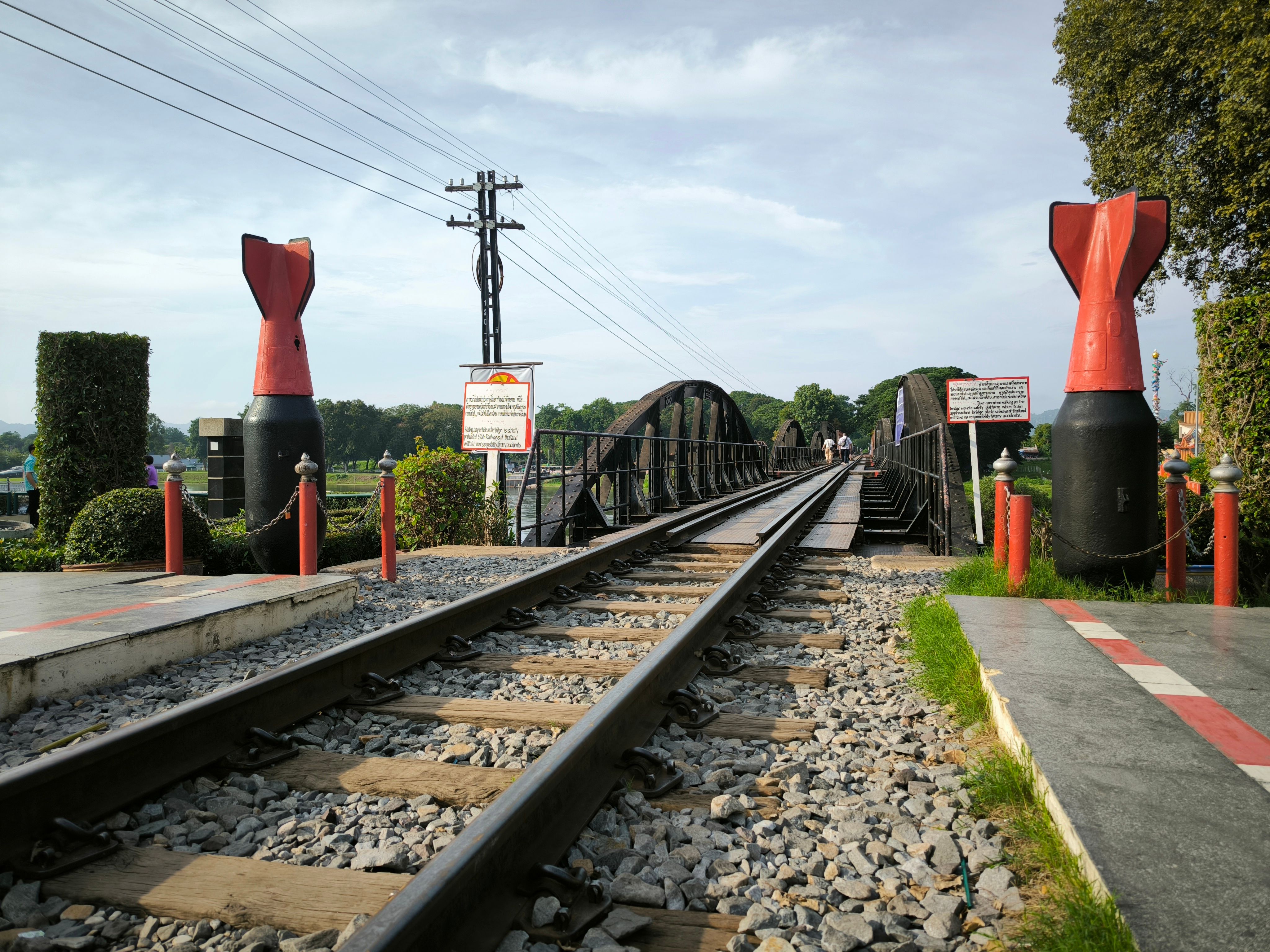
The Bridge on the River Kwai is smaller than you expect. You've seen the film, or at least absorbed it secondhand, and then you arrive and it's a modest steel bridge with souvenir stalls at one end and a queue of people taking the same photo at the other. I watched a tour group spend eleven minutes there, bus to bus, before rolling on to a lunch stop. Eleven minutes, for a three-hour round trip from Bangkok.
That's the standard Kanchanaburi experience, and it's a waste of Kanchanaburi. The bridge is real history and worth crossing, but it's the least interesting thing in a province that has two national parks, a river you can sleep on, one of the most affecting war memorials in Asia, and a seven-tier waterfall that makes the bridge look like an appetizer someone forgot to clear. The fix is simple: stay the night. Two nights if you can.
Getting there
Kanchanaburi is about 130 km northwest of Bangkok. Buses from the Southern Bus Terminal (Sai Tai Mai) take 2.5 to 3 hours for around 100 THB, and minivans from the same terminal run direct and a little faster. The old Victory Monument vans moved out to the bus terminals years ago, so ignore any guide that still sends you there.
The train is slower and better. Two services a day leave Thonburi station on the west side of Bangkok and rattle out through sugar cane country in about two and a half hours. The carriages are old, the windows open, and the fare is nearly nothing. This line matters, too: past Kanchanaburi it becomes the actual Death Railway, running to Nam Tok over the Wang Pho viaduct, a wooden trestle bolted to a cliff face above the river. Riding a working train over track that was laid at that human cost is a strange feeling, and I mean that as a reason to do it.
Book transport
Getting to Kanchanaburi
Compare options on 12Go.
The history, done properly
Here's a number: around 100,000 people died building the Thailand-Burma Railway. Most of them were Asian labourers, Tamils, Malays, Burmese, whose names largely went unrecorded, alongside the Allied prisoners of war whose story the film made famous. It's hard to know what that number means, until you're standing in the Kanchanaburi War Cemetery reading ages off headstones and realising you've been walking for ten minutes and haven't reached the end of it.
The Thailand-Burma Railway Centre, right next to the cemetery, is the museum to prioritise. It's careful, well-organised, and honest about difficult material without being ghoulish. The JEATH War Museum by the river is older and rougher; go if you have the time, but go to the Railway Centre first.
Then, if you do one thing beyond the town, make it Hellfire Pass. It's 80 km northwest, a cutting the prisoners blasted through solid rock on night shifts lit by torches and bamboo fires, which is where the name comes from. The Australian government maintains a memorial museum there and admission is free. You walk down into the cutting itself, and the audio guide, with recordings of survivors, is the best of its kind I've come across anywhere. Tour buses mostly skip it because it doesn't fit between the bridge and lunch. Their loss, very literally.
Sleep on the river
Kanchanaburi's guesthouses line the riverbank along Maenam Kwai Road, and a good number of them float. Raft rooms are a Kanchanaburi tradition: wooden rooms on pontoons, moored to the bank, most of them fan-only. The river breeze does the job the air conditioner would have, and falling asleep to water moving under the floor is worth more than the two stars the room technically has. These places are priced for Thai backpackers as much as foreign ones, so the whole street stays cheap.
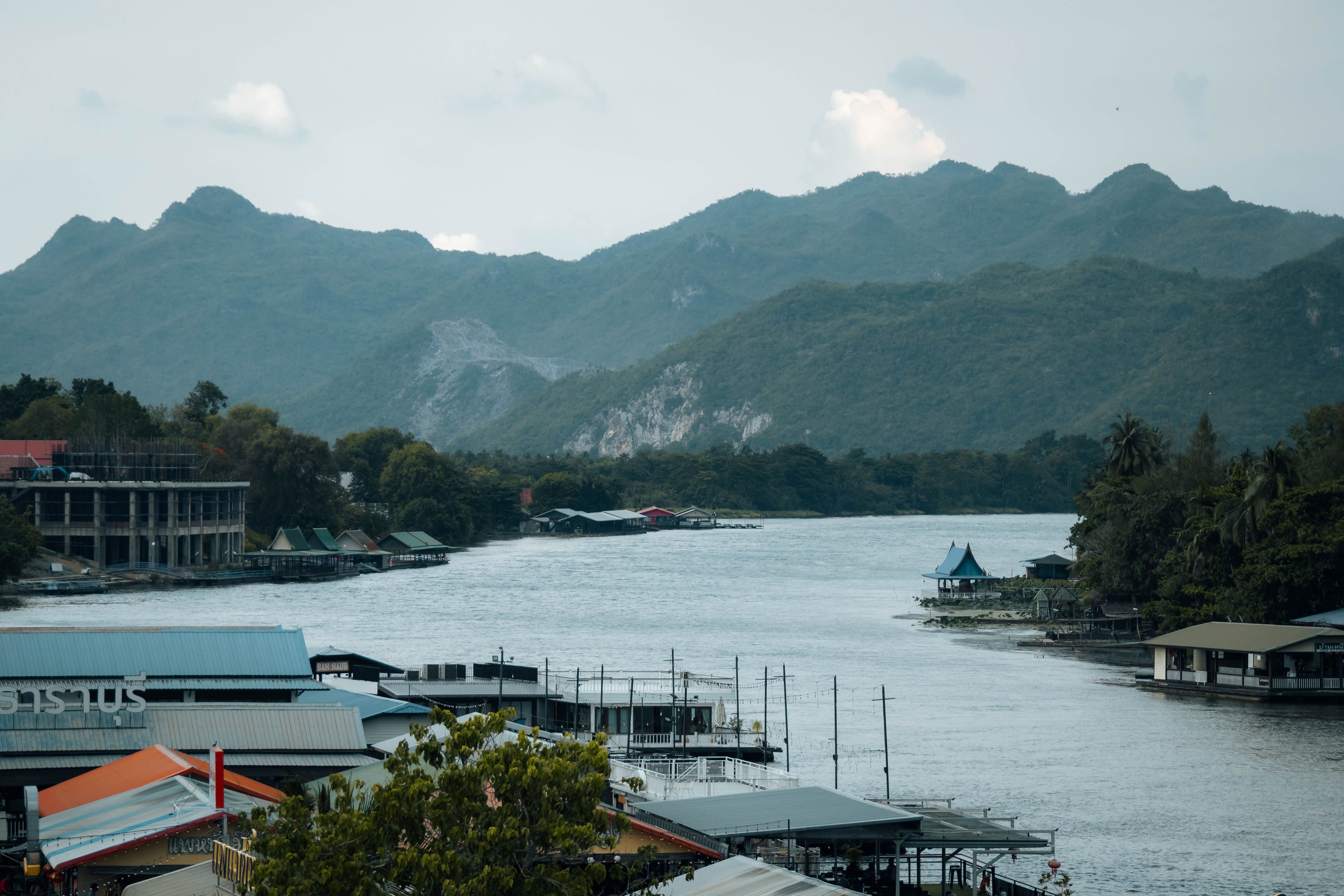
One warning drawn from experience: some raft operations upriver host karaoke party boats on weekends. Ask whether your quiet river night is downstream of one.
Evenings here are easy. The night market near the station covers dinner for pocket change, and the riverside restaurants do grilled river prawns the size of small lobsters. The floating restaurants look the most romantic; the ones on the bank usually cook better.
Erawan
Erawan National Park is the reason to structure the whole trip around a second day. It's 65 km north of town, a 1.5-hour songthaew ride, and it's a chain of seven waterfall tiers, each pouring into limestone pools the colour of things you normally only see in filtered photos. Except here the filter is just calcium carbonate and sunlight.
The crowd math is straightforward. Tiers 1 through 3 are an easy walk and get everyone. Tiers 4 through 7 require an actual sweaty forest hike, and the crowd thins with every tier like a sieve sorting for effort. Tier 7 at the top is a narrow fall into a cold pool, often with nobody there at all if you started early. Start early. The first songthaew from town leaves around 8am, and by 10am the lower pools on a weekend are a public swimming bath.
The pools have fish that nibble dead skin off your feet. Some people pay for this in shopping malls. Here it's included, whether you want it or not.
Further up the valley
Past Erawan the province keeps going and keeps emptying out. Sai Yok National Park has a waterfall that drops straight into the river, best seen from a raft hotel moored beside it. The road north through Thong Pha Phum runs between forested ridges toward Sangkhlaburi and the Three Pagodas Pass on the Myanmar border, about 240 km from town. That's proper remote Thailand and needs its own trip, or at least your own wheels. I mention it mostly so you know the bridge is the first page of this province, not the whole book.
How long to stay
One night minimum. Two nights covers the bridge, the Railway Centre and cemetery, a proper morning at Erawan, and an evening on the river without ever hurrying. Three nights adds Hellfire Pass and the train to Nam Tok. The town is cheap and relaxed enough that the extra night costs you almost nothing, and day-tripping it from Bangkok costs you almost everything worth coming for.
Trip planner
Planning Kanchanaburi? See which days suit it.
The free trip planner shows the seasonal weather verdict for Kanchanaburi on your dates, how long it takes to get there from your other stops, and where to book.