Tip · Pair it with Wat Arun. They are a short walk apart on the same side of the river, so take the public boat over, do the temple, then walk south into Kudichin.
Most people cross the river to see Wat Arun and then turn straight back. A few hundred metres south, on the same bank, there is a quiet neighbourhood almost no visitor walks into. It is called Kudichin, and it is the closest thing Bangkok has to a Portuguese quarter.
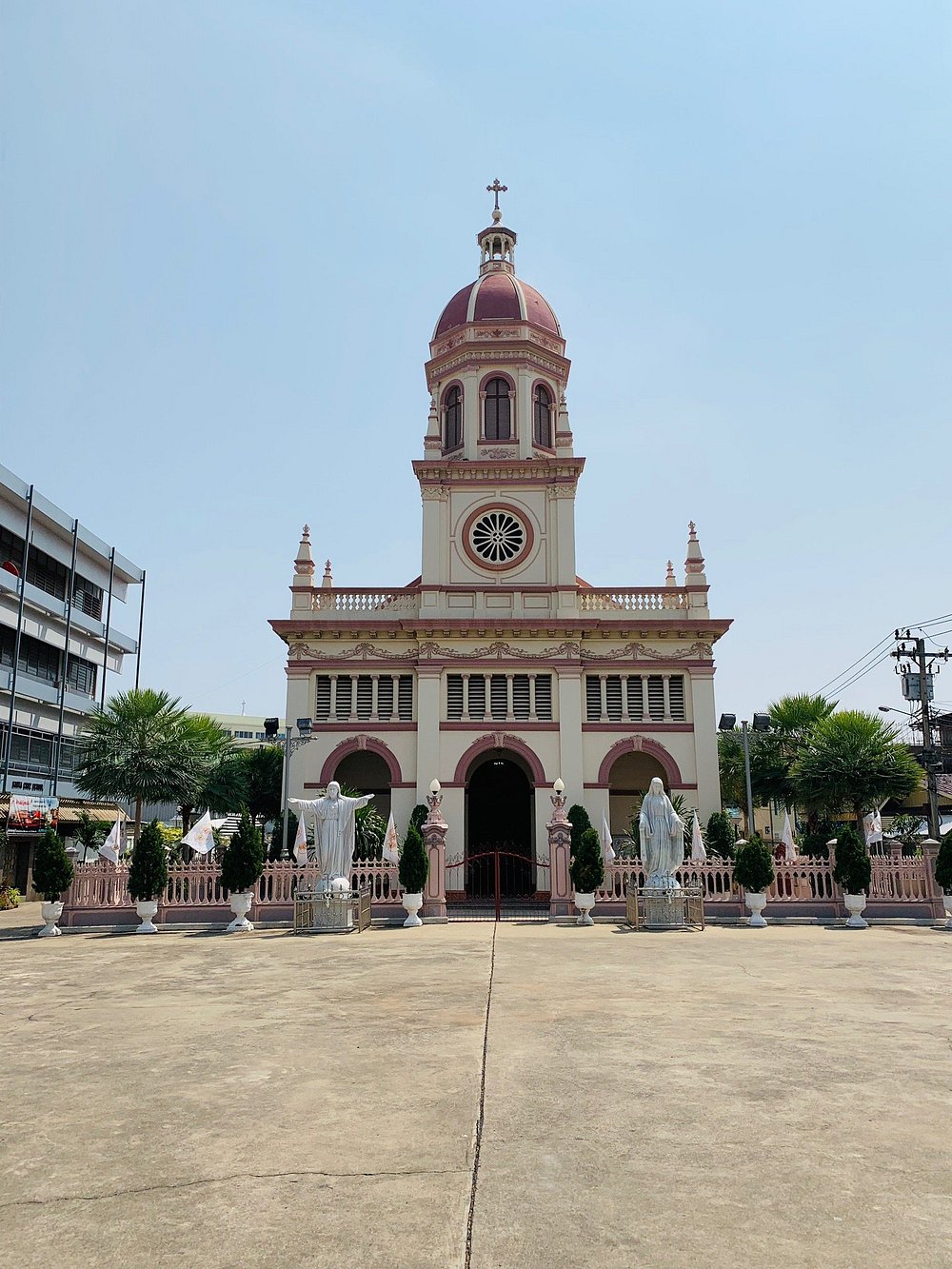
How a Portuguese community ended up in Bangkok
When Ayutthaya fell in 1767 and King Taksin moved the capital across to Thonburi, the Portuguese who had fought alongside the Siamese were given a stretch of riverbank to settle. They built a Catholic church there, Santa Cruz, around 1770. The church you see today is the 1916 version, rebuilt by Italian architects, and it still anchors the neighbourhood. Somewhere around two thousand Thai-Portuguese descendants still live in the lanes around it, which is what makes the place feel like a community rather than a monument.
It still feels local
This is the part I liked most. The lanes are narrow, the houses are people's homes, and there is very little here that was put in for tourists. You walk past kitchens and small shrines and the occasional shop, with the church tower showing over the rooftops. It is a working residential neighbourhood that happens to have three hundred years of history in it, not a restored set. Keep your voice down and remember you are walking through where people actually live.
The cake only three families still make
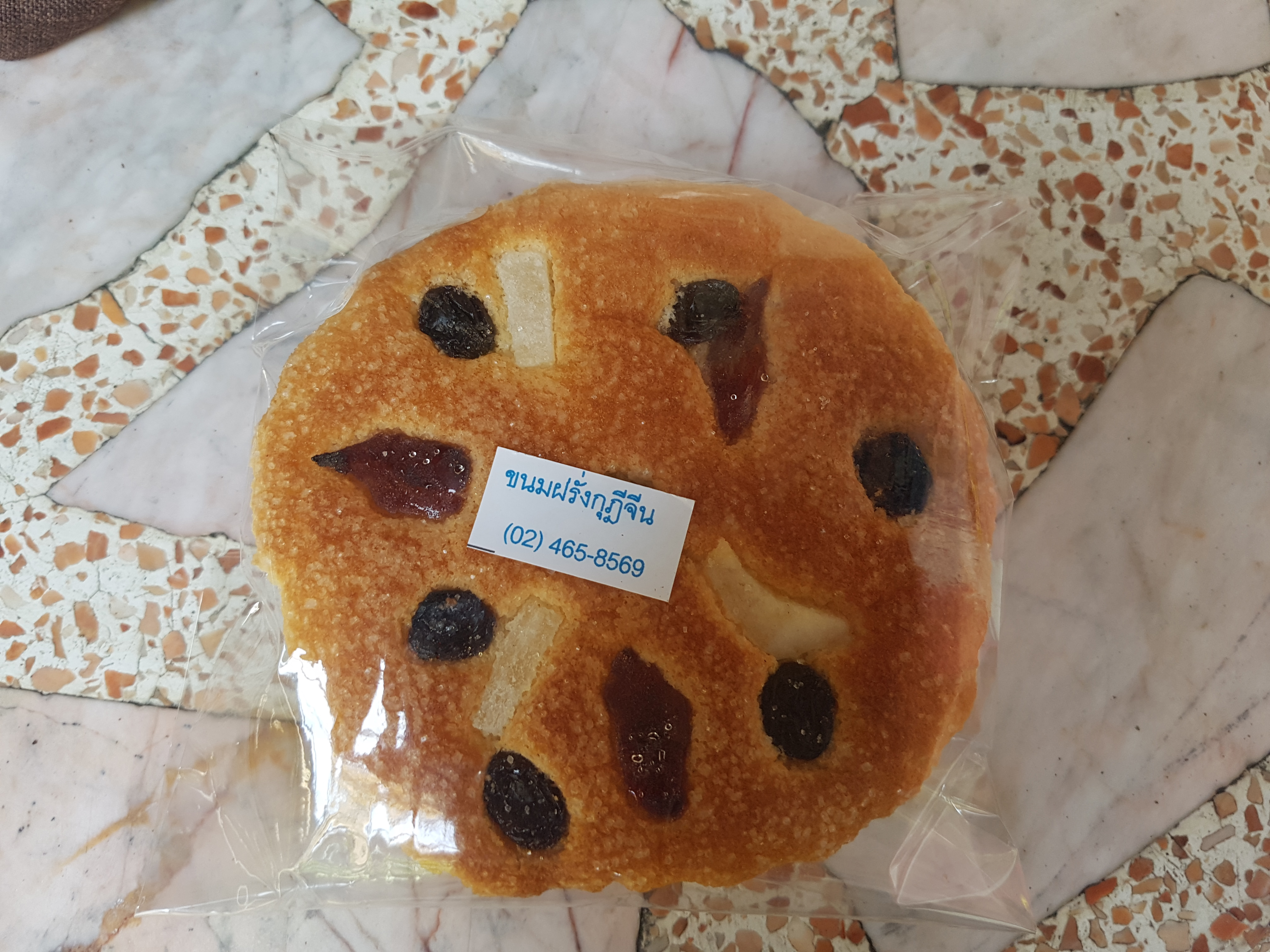
The food is the reason a lot of people come, and it was what impressed me most. The neighbourhood's signature is kanom farang kudi chin, a small cake that came out of the mixing of Portuguese and Chinese baking. It is made with wheat flour, sugar and duck eggs, no yeast or baking powder, baked over charcoal and topped with raisins and candied winter melon. It is lighter and less sweet than it looks, and a piece costs next to nothing. Only three families still make it the old way, so if you see it fresh, buy it there rather than expecting to find it elsewhere in the city.
Baan Kudichin Museum
The small museum in the middle of the community is worth the twenty minutes it takes. It is a three-storey wooden house set up by a local descendant of the original Portuguese settlers, and it walks you through the history, the faith, and the Thai words that came from Portuguese. The top floor opens onto a rooftop with a view over the Chao Phraya. Entry is free, and it is open Tuesday to Sunday, 9:30am to 5:30pm.
- Best for
- The Portuguese story, old photographs, a rooftop river view
- When
- Tuesday to Sunday, 9:30 to 17:30. Free entry
Getting there, and making an afternoon of it
The easy way to see Kudichin is to pair it with Wat Arun, since they are a short walk apart on the same side of the river. I like taking the public boat across to Wat Arun rather than a river cruise, wandering that side, and then dropping south through the lanes towards the Santa Cruz Church tower into Kudichin. If you are coming straight from the Bangkok side instead, the cross-river ferry from Rajinee pier is a few baht.
Kudichin itself is only an hour or two, and a weekday morning is the best time for it. The light is good on the rooftop and the bakeries are fresh. If you want to stretch it into a full outing, do the neighbourhood and the temple through the afternoon, then cross back to the Bangkok side for dinner at one of the restaurants opposite Wat Arun, somewhere like Chom Arun, and watch it light up over the river at sunset. Kudichin stays a short, quiet stop either way.
For more of this side of Bangkok, our guide to Bangkok without the tourist traps covers where else to skip the crowds, and the Bangkok neighbourhood guide helps you work out where to base yourself.