Tip · Hire a guide for the park. You'll see wildlife in two hours that you'd walk past all day on your own. The rangers at the visitors' centre can recommend independent licensed guides.
Most wildlife experiences sold to tourists in Thailand are staged, and you know it while it's happening. Khao Yai is the correction. It's Thailand's oldest national park, three hours from Bangkok, and the elephants there don't pose. They walk out of the forest onto the road on their own schedule, a line of cars stops, everyone goes very quiet, and for a few minutes you remember what the word wild actually means. Then the elephants leave, because you were never the point.
The park covers more than two thousand square kilometres of forest and grassland and it's the anchor of a UNESCO World Heritage complex. Gibbons sing at dawn. Great hornbills, birds the size of a toddler with a wingspan to match, crash around in the fig trees. Gaur, which are what you'd get if you asked for a cow but specified nightmare sizing, graze along the road at first light.
And then, because Thailand enjoys a contradiction, the hills around the park are the country's wine region. You can watch wild elephants at dawn and drink a Thai Syrah on a vineyard terrace by mid-afternoon. No other trip from Bangkok offers that combination, and weirdly few foreign visitors know it exists.
Getting there
The gateway town is Pak Chong, about 150 km northeast of Bangkok on the road and rail line to Isaan. Buses and minivans from Mo Chit take 2.5 to 3 hours. The train from Bangkok stops at Pak Chong too, and it's a pleasant ride, but the schedule rarely lands you there at a useful hour for the park.
Here's the honest version: Khao Yai is a place where your own wheels change everything. The park is huge, the sights are spread along a 40 km road, the animals move at dawn and dusk, and public transport inside the park doesn't exist. Rent a car in Bangkok, or hire a driver locally, or take a guided tour. I'm usually the person telling you to skip the tour agency and do it yourself, so read the next sentence carefully. Khao Yai is the one trip where a good guide is worth the money, because a guide with a spotting scope and ten years of knowing which fig tree is fruiting will show you more wildlife in two hours than you'd find alone in two days.
Book transport
Getting to Pak Chong
Compare buses and trains on 12Go.
In the park
The main road climbs from the northern checkpoint over the mountains, and the rhythm of a good day is built around light. Be inside when the gates open at 6am. Drive slowly through the grasslands in the centre of the park, where the elephant herds and the gaur come out to graze. Spend the harsh midday hours at the waterfalls, when the animals are sensibly asleep and you should be swimming. Then go back out for the last two hours of light, which is when the forest wakes up again.
Haew Suwat is the famous waterfall, a short walk from the road, pouring off a cliff into a green pool. Haew Narok in the south is the big one, 150 metres in three tiers, and after rain it makes a sound you feel in your chest. The viewing platform hike is short and steep-ish and worth it.
For the birds, Khao Yai is one of the best sites in Southeast Asia, and you don't need to be a birder to be converted by a great hornbill. The first time one flew over me I ducked. The wingbeats are loud enough that you hear the bird before you see it, like someone shaking out a heavy blanket in the canopy.
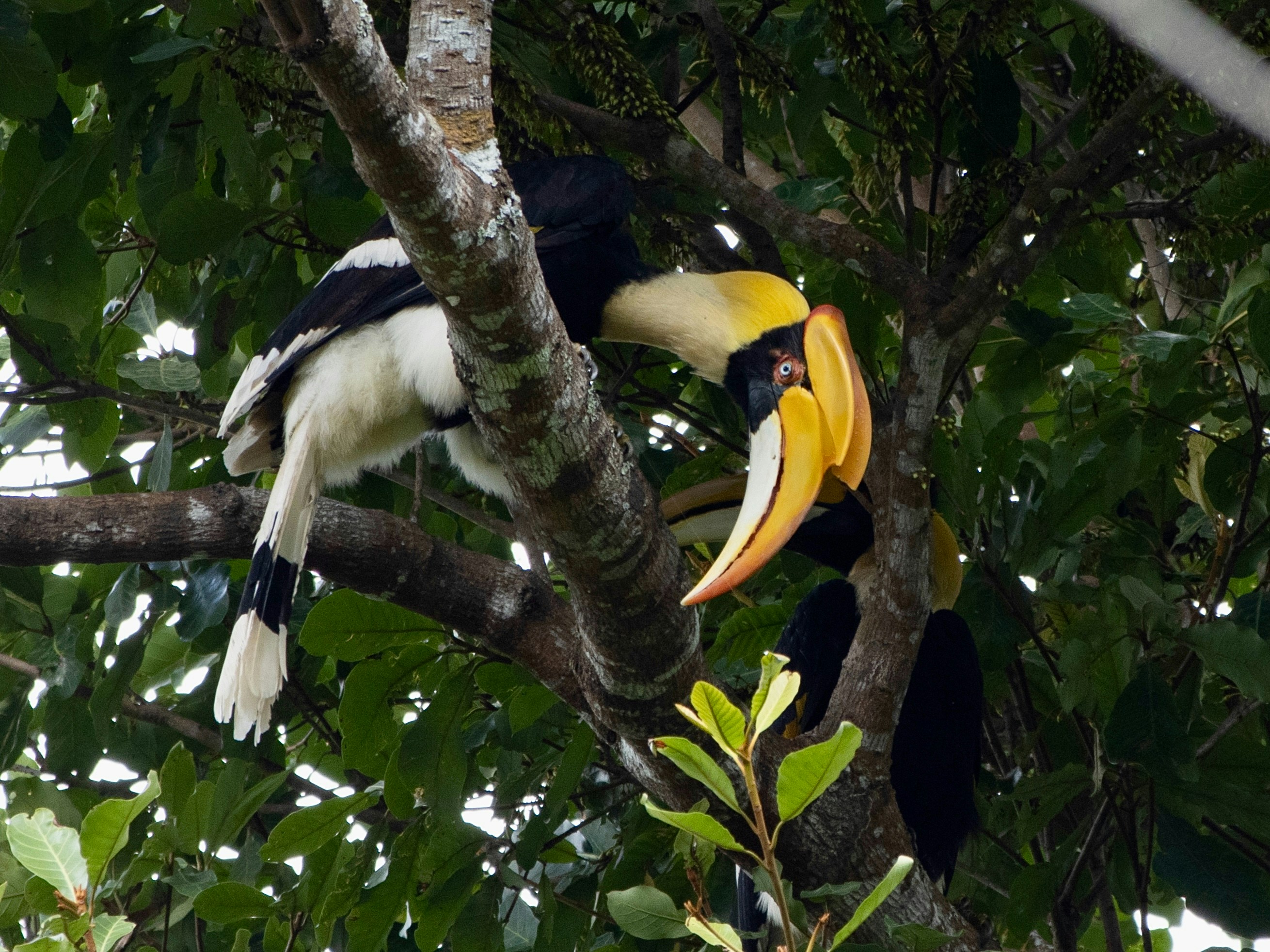
Weekends are busy, especially in the cool season, and the grassland viewpoints turn into polite traffic jams. Come midweek if you possibly can. The animals didn't get the memo about weekends, but the crowds did.
Where to stay
You have three real options. Camping inside the park is the purist's choice: the DNP campsites and bungalows put you inside the gates for dawn, the deer wander between the tents like they hold season passes, and nights are genuinely cold in December and January. Book ahead on the DNP website for weekends.
Most people stay on Thanarat Road, the 25 km corridor of resorts between Pak Chong and the park gate. Quality runs from simple guesthouses to design hotels, and staying near the gate end means you're at the checkpoint at 6am with coffee still warm. Pak Chong town itself is the budget-and-logistics option: cheapest beds, the train station, a good night market, but a 30-minute commute before the park even starts.
The wine part
The Asoke Valley west of the park road is where Thai wine stopped being a joke. GranMonte is the serious producer, a family operation whose wines have collected real international awards, with a tasting room and a very good vineyard restaurant. PB Valley next door is the bigger, older estate with tours running all day. Thai wine still surprises people, and the correct response to that surprise is a tasting flight on a terrace with the park's mountains stacked up behind the vines.
The rest of Thanarat Road caters to Bangkok weekenders with money and a taste for European cosplay: an Italian-village shopping strip, a Tuscan castle hotel, sheep farms with photo props. It's surreal, it's harmless, and Farm Chokchai's dairy does legitimately good ice cream. I'll allow it.
When to go
November to February is the sweet spot: cool dry air, animals concentrated around water, and mornings cold enough at elevation to justify the jacket you almost didn't pack. March to May is hot down on the plains but tempered by altitude in the park, with some haze early on. The wet season, June to October, greens everything, fills the waterfalls, and introduces you to leeches, which are harmless, persistent, and excellent motivation to keep hiking. September and October are the wettest and some trails close.
Give it two nights. One dawn for the animals, one day for waterfalls and wine, one more dawn before you leave because the first one will have gotten under your skin. Day-tripping Khao Yai from Bangkok is technically possible in the way that reading a book's back cover is technically reading.
Trip planner
Planning Khao Yai? See which days suit it.
The free trip planner shows the seasonal weather verdict for Khao Yai on your dates, how long it takes to get there from your other stops, and where to book.