Tip · Go on a Tuesday or Wednesday. Weekends turn the beach into a Bangkok suburb with waves.
Nobody flies to Thailand to go to Bang Saen, and that is exactly why you should consider going. It's the beach Bangkok uses when it wants a beach without the performance: no beach clubs, no parasailing touts, no one waving a laminated tour menu in your face. Just a long crescent of sand, a few thousand plastic deck chairs, and some of the best cheap seafood within reach of the capital.
The town sits in Chonburi province, about 90 km east of Bangkok along the road that eventually becomes Pattaya. Almost everyone on that road keeps driving. What they're skipping is a proper Thai seaside town of about 100,000 people that fills up with university students and Bangkok families on weekends and then goes quiet again by Monday morning. The first time I went on a weekday I counted more stray dogs on the beach than foreigners. The dogs were friendlier than the vendors, and the vendors were pretty friendly.
Let me be honest about the water, because someone has to be. This is the upper Gulf of Thailand, and the sea here is murky. Not dirty, just brown-green in the way shallow Gulf water is. If you've got Railay or Koh Lipe in your head, adjust that picture now. You don't come to Bang Saen to snorkel. You come to sit in a deck chair with a plate of grilled squid, watch Thai families do a beach holiday the way they've always done it, and pay about a third of what the same afternoon costs in Pattaya.
Getting there
Bang Saen is 1.5 to 2 hours from central Bangkok. Buses leave the Eastern Bus Terminal (Ekkamai) through the day and cost under 100 THB. Minivans from Mo Chit run to the Chonburi bus station, and from there a songthaew (a shared pickup truck with benches, flat fare) takes you the last stretch to the beach. Written down it sounds like a puzzle. In practice you sit down, someone tells you when to get off, and you're there.
Driving or taking a Grab works too, and midweek the parking near the beach is easy. On a Saturday morning the road in becomes one long queue of Bangkok plates, which tells you everything about who this beach belongs to.
There's no useful train. Technically you can take the Eastern Line partway and connect, but you'd be inventing a longer trip for the fun of it.
The beach
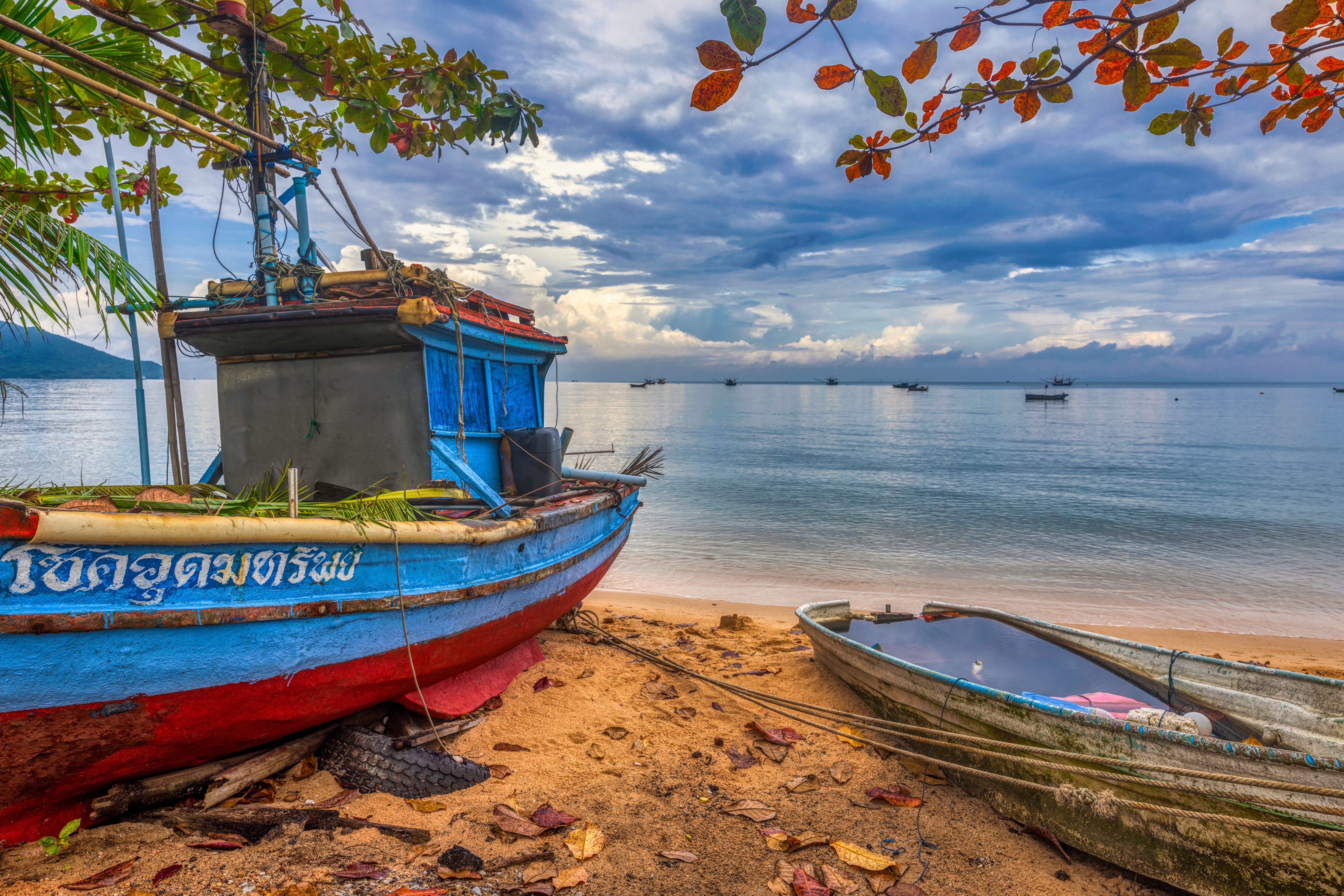
The main beach runs a few kilometres north to south, lined the whole way with restaurants, vendors, and chair rentals. Rent a chair, and food finds you: grilled squid on skewers, som tam pounded to order, whole fish, fried insects if you're curious, cold beer if you're not. The pointing system works fine. Nobody expects you to speak Thai, though at Bang Saen, unlike the islands, nobody has rehearsed an English sales pitch either.
The northern end near Khao Sam Muk has more going on. The hill itself has a shrine, a decent view over the bay, and a large troop of macaques that have spent generations perfecting theft. Standard monkey rules apply: nothing loose in your hands, no eye contact while holding food, and accept that the monkeys have seen every trick you think you've invented.
South of the main strip, Wonnapa Beach is the quiet continuation. Fewer vendors, more casuarina trees, and the aquarium at Burapha University's marine science institute at the far end, which is small, cheap, and better than it has any right to be.
The food is the actual reason
Burapha University keeps the town young and the food cheap. The streets around campus are full of noodle shops, grilled chicken stalls, and the kind of 60-baht meals that student economies produce. Then there's Nong Mon Market on the Sukhumvit road, which Thai people will detour for even when they're not going to the beach. It's famous for khao lam (sticky rice roasted in bamboo), dried seafood, and sweets, and half of Bangkok seems to stop there on the drive home to buy boxes of the stuff for relatives. Do what they do.
The beachfront seafood restaurants are the other half of it. Ice trays out front, you point at what looks good, and it arrives grilled or steamed with the dips. Fresher and cheaper than anything comparable in Bangkok, because it didn't have to make the trip.
Si Racha, since you're here
Si Racha is 15 minutes down the coast and worth the hop. Yes, that Sriracha, although the local original is thinner, milder, and better with seafood than the American rooster-bottle version. The town has a seafood market on the pier, some old shophouse streets, and Ko Loi, a small rocky island with a temple on it that you reach by walkway. Most people drive past without ever noticing it exists.
Si Racha's pier is also where boats leave for Ko Si Chang, a small car-light island 12 km offshore with quiet beaches and the ruins of a royal summer palace. Under an hour each way. If you want a Thai island with no party scene whatsoever, this is one of the last ones near Bangkok that qualifies.
When to go
Midweek. That's the whole strategy. A Tuesday at Bang Saen is calm, local, and cheap. A Saturday is Bangkok with sand. If a weekend is your only option, arrive early and either leave before the evening exodus or stay the night and enjoy Monday morning when the town exhales. Hotels here are priced for Thai guests, which means functional rooms at prices that will make you double-check the booking. Don't expect English signage or a rooftop pool. Do expect change from a thousand baht note.
Weather follows Bangkok: dry and pleasant November to February, hot March to May, rainy June to October with September and October the wettest. A grey September day here is still warm, and the seafood doesn't care about the clouds.