Tip · Take a longtail from Ao Nang pier (east end of the beach), 100 THB per person. Don't go to Krabi Town pier for this. It's a much longer ride.
There are no roads into Railay. The peninsula is surrounded on all sides by limestone cliffs that make road access impossible, so the only way in is by longtail boat from Ao Nang, 15 minutes away. That geographical quirk is what keeps Railay from turning into another Ao Nang. Not entirely, but enough that it still earns the trip.
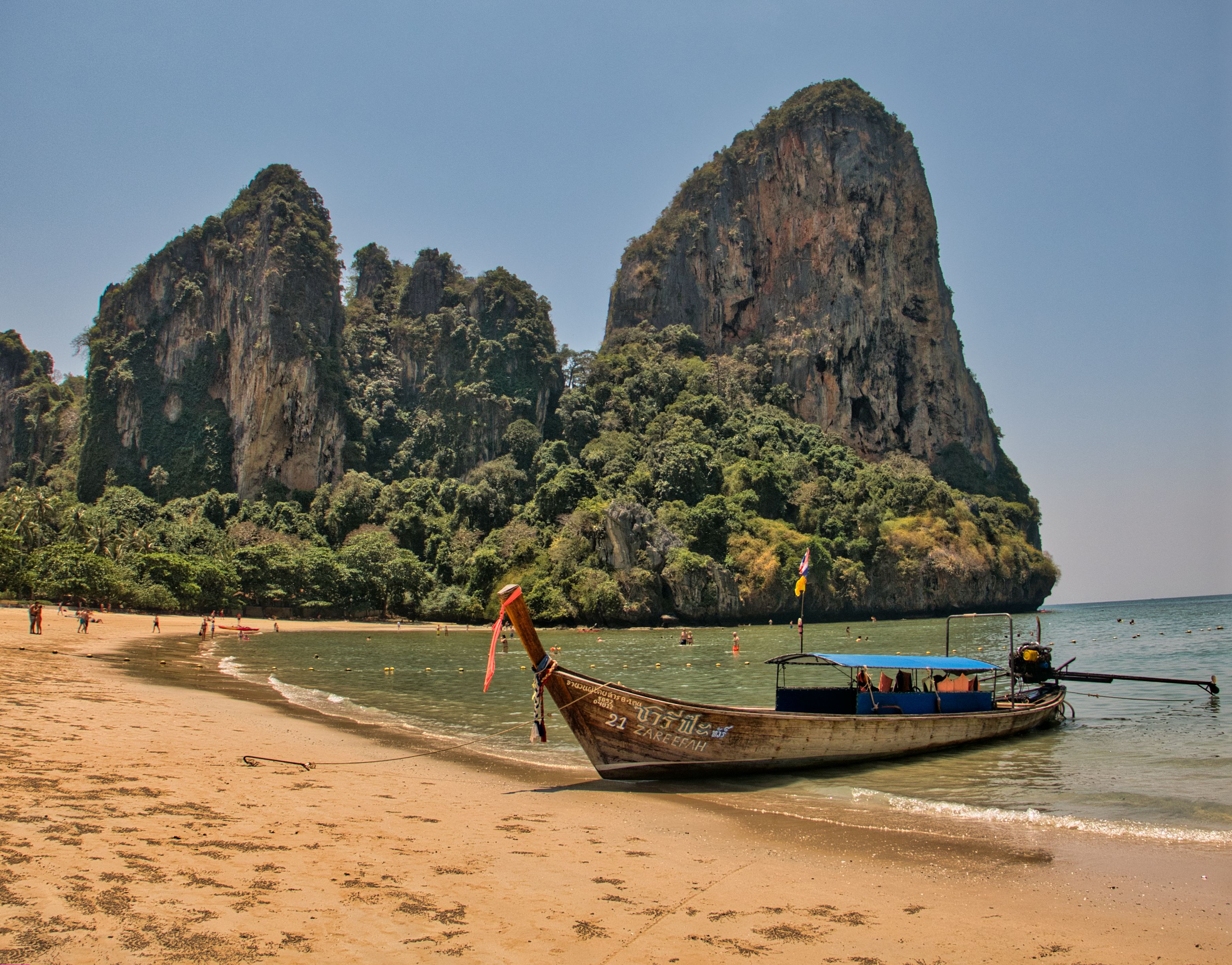
The cliffs are the defining feature. They rise almost vertically out of the sea at the edges of the beach, covered in green, with climbers picking their way up the rock on most dry-season mornings. Behind the beach the limestone continues inland across a narrow plateau between Railay West (the main swimming beach) and Railay East (the mangrove side, where longtails from Krabi Town dock). The whole peninsula is small. You can walk the width of Railay in about five minutes.
Getting to Railay
From Ao Nang, longtail boats leave from the pier at the eastern end of the beach. The fare is 100 THB per person each way. Boats depart whenever they fill up (usually six to eight passengers), and in high season there's rarely a wait longer than 15 minutes. The ride takes 10–15 minutes depending on sea conditions.
You can also get a longtail from Krabi Town pier, which is useful if you're arriving from a Koh Lanta ferry and don't want to backtrack to Ao Nang first. The fare is higher (around 150 THB per person) and the journey is longer, closer to 45 minutes. Unless you're already in Krabi Town, the Ao Nang route is almost always the better option.
One thing to know: longtail boats stop running after dark. The last boats back from Railay leave around sunset, roughly 6:30–7pm depending on the time of year. If you're staying on Railay, this isn't a problem. If you're on a day trip and lose track of the time, you'll be negotiating a private charter for considerably more than 100 THB.
The four beaches
Railay has four distinct beach areas and they are not interchangeable.
Railay West
The main beach. A 500m arc of sand backed by palm trees, with limestone cliffs framing both ends. The water is calm and clear in the dry season and good for swimming. This is where most longtails from Ao Nang drop you and where most of the resorts and restaurants sit. In the afternoon the beach fills up with day-trippers. By 5pm, once the last boats leave, it quiets down noticeably. If you're staying overnight, the evenings at Railay West are the reason to do it.
Phra Nang Cave Beach
Walk south along the base of the cliffs from Railay West for about five minutes and you reach Phra Nang Cave Beach. This is the better of the two main beaches: smaller and more sheltered, with water that shifts between green and blue, and the limestone rising directly from the sand at both ends. The cave at the far end is a fertility shrine stuffed with wooden offerings left for the goddess said to live there. It's one of those genuinely strange, specific things you don't expect to find.
Phra Nang gets crowded. The 4 Islands tours stop here, as do direct boat trips from Ao Nang, and for a couple of hours around midday it can feel like too many people in a small space. If you're staying on Railay, go early morning or late afternoon when the day-trippers have mostly come and gone.
Railay East
The mangrove side of the peninsula. You can't swim here: the water is shallow and the bottom is mud at low tide. Some longtails from Krabi Town dock here, which is why some visitors arrive and think they've got the wrong place. Walk five minutes on the paved path across the plateau to reach Railay West.
Railay East has the cheaper accommodation and a couple of bars. It's also where you'll find the start of the viewpoint hike.
Tonsai Beach
At low tide, a rocky path along the cliffs at the north end of Railay West connects to Tonsai Beach, a smaller bay around the corner. Tonsai is the budget and climbing scene: cheaper bungalows, more backpacker atmosphere, and direct access to the climbing routes that made this area famous. At high tide the path floods and you need to wade or take a boat.
If you don't climb and you're here for a comfortable beach holiday, Tonsai is probably not worth the scramble. If you climb, you'll likely want to be based here rather than at Railay West.
Rock climbing
Railay and Tonsai together form one of the best sport climbing areas in Southeast Asia. The rock is limestone, which means technical face climbing on pockets and edges. The grades range from beginner-friendly introductory routes to serious multi-pitch climbs that require real experience.
For complete beginners, several operators on Railay run half-day introductory sessions. You spend a couple of hours on actual rock, learn to clip bolts, take controlled falls, and move on vertical terrain. It's a better afternoon than lying on the beach for most people who try it. King Climbers is the longest-established operator on Railay and a reasonable starting point.
If you already climb and just need gear rental and route information, any of the climbing shops will be able to help you.
The viewpoint hike
From Railay East, a rough path climbs through the jungle to a viewpoint on top of the plateau. It's steep, involves scrambling over roots and exposed rock, and has a fixed rope in the steepest section. The hike takes about 20–30 minutes up and gives you a clear view of both Railay West and Railay East laid out below you. Looking down at the two beaches separated by a thin strip of palm trees, the view is good enough to make the scramble worthwhile.
Wear proper shoes rather than sandals. Go early morning or late afternoon. The ground is slippery after rain.
Day trip or overnight stay
Most people visit Railay as a day trip from Ao Nang and it works well. You get a full day on the beach, time to walk to Phra Nang, a low-tide scramble over to Tonsai if that appeals, and the longtail back before dark.
Staying overnight makes sense if you want the beaches to yourself in the mornings and evenings, or if you're climbing and want to be based near the routes. The accommodation options are more limited than Ao Nang and generally pricier for what you get: a handful of resorts on Railay West and cheaper bungalows at Railay East and Tonsai. The restaurant situation is fine but thin: a few decent places at Railay West, not much beyond that.
For most visitors who aren't climbers: a full day trip is the right call. Come back a second day if the first one wasn't enough.
Where to stay
Where to stay
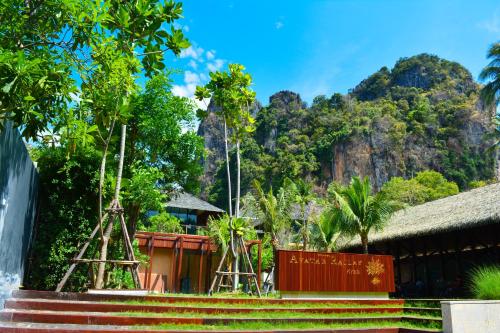
Avatar Railay Hotel
Practical notes
Pack everything you need before you go. There are a couple of small shops on Railay but the prices are higher than Ao Nang and the selection is limited. Sunscreen, water, and cash are the three things to think about. There are a few ATMs on Railay West, but they're scarce and they charge the usual 220 THB foreigner fee on top of a generally poor rate, so bring enough cash to cover your stay rather than relying on them.
In the dry season (November to April), the water at Railay West is clean and clear. In the wet season (May to October), the sea gets rough, the water can cloud up, and boat services are sometimes suspended on bad days. Visiting Railay in the wet season is possible but less reliable, and the experience is noticeably different.
Railay looks exactly like the photos, which is itself surprising. Most places don't. The cliffs are bigger in person than any photo conveys. A day trip from Ao Nang is the minimum worth doing; an overnight stay gives you the place at its quietest and most worthwhile.
For everything about getting to Krabi, where to base yourself, and what else to do in the province, see the Krabi travel guide.