Tip · Don't base yourself in Patong unless nightlife is the point of your trip. Kata, Karon, or the Old Town give you a far better sense of the island, and Grab back to Patong for a night out is cheap enough.
Most people who say they hate Phuket stayed in Patong. Patong is the loud, neon, beer-bar strip that fills every negative review, and if it's your only experience of the island then the reviews are fair. But Patong is one small corner of a large island, and the rest of Phuket has quiet beaches, a genuinely interesting old town, and some of the best day trips on the Andaman coast. The trick is knowing where not to stay.
Phuket is Thailand's largest island and it's connected to the mainland by a bridge, so it doesn't feel like an island in the way Koh Lanta or Koh Yao Yai do. It's closer to a small province: an airport, a working town, shopping malls, hospitals, and a string of west-coast beaches that each have their own character. Where you base yourself decides almost everything about the trip.
Getting to Phuket
Almost everyone flies in. Phuket International Airport (HKT) sits at the north end of the island and takes direct flights from Bangkok in about 1 hour 25 minutes, plus a growing list of direct international routes. From Bangkok, AirAsia, Nok Air, Thai Lion, and the full-service carriers run the route constantly, and if you book a week or two ahead you'll usually find fares around 1,200 to 2,500 THB.
The thing nobody warns you about is the transfer from the airport to your hotel. The airport is roughly 45 minutes to an hour from the main southern beaches, and the taxi situation there has been a racket for years. Use the airport's official metered taxi or minibus counters, or pre-book a transfer through your hotel, rather than following whoever approaches you in arrivals.
If you're already on the Andaman coast, Phuket connects by bus and minivan to Krabi (about 3 hours) and Khao Lak to the north, and by ferry to Phi Phi and Koh Lanta in the high season. For the wider picture of when the Andaman coast is worth visiting, the best time to visit Thailand guide covers the calendar.
Book transport
Getting to Phuket
Compare schedules and prices on 12Go.
Where to stay
This is the decision that makes or breaks a Phuket trip. The beaches run down the west coast, and they get quieter and more upmarket the further south you go.
Patong
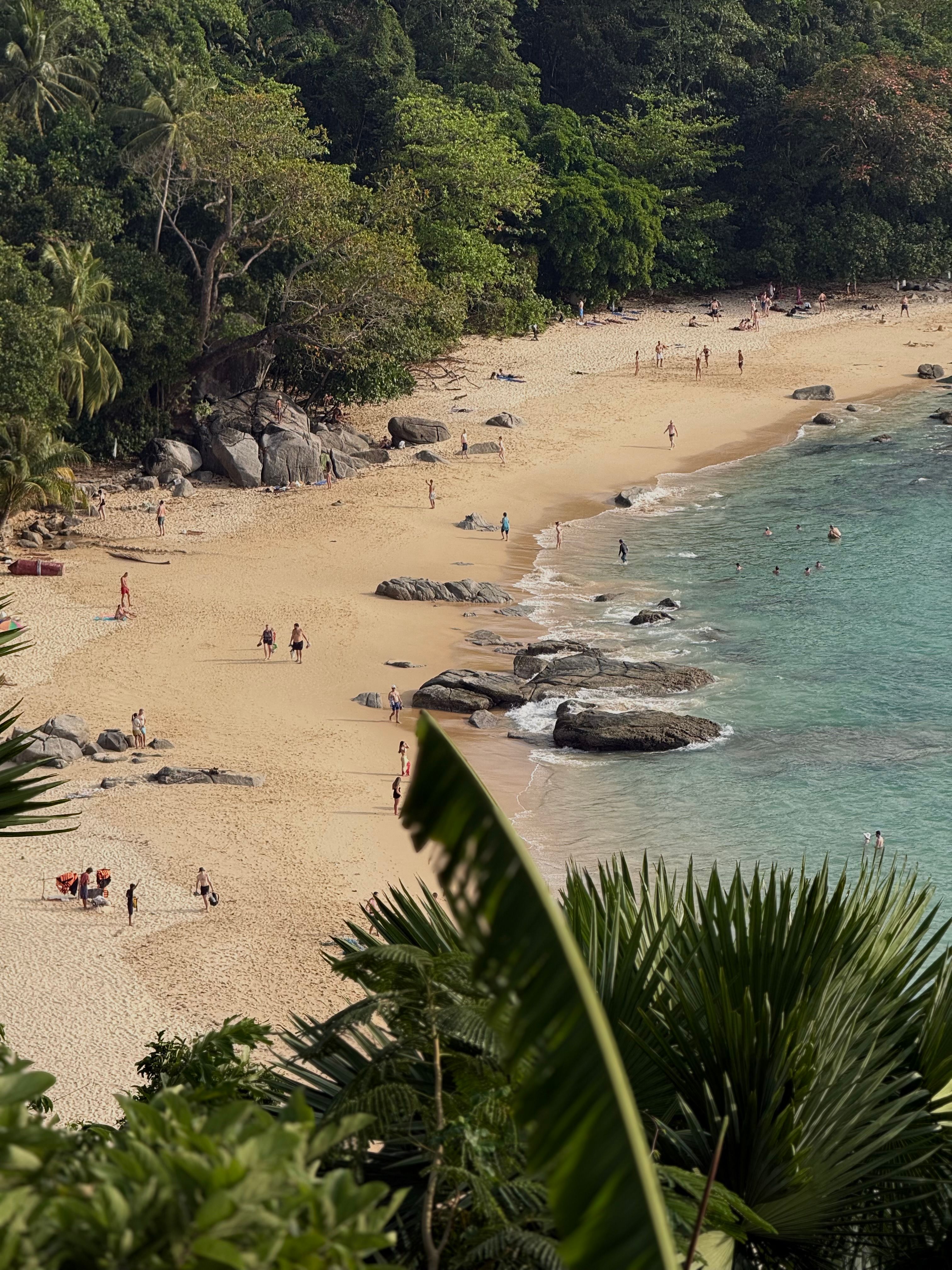
The party strip. Bangla Road, beer bars, clubs, and the most developed beach on the island. It's convenient, it has every service you could want, and the beach itself is fine in the daytime. But it's crowded, the touts are relentless, and the atmosphere after dark is not for everyone. Stay here only if nightlife is genuinely the reason you came. If it is, Patong does it better than anywhere else in southern Thailand.
Kata and Karon
My default recommendation for first-timers. These two adjacent beaches just south of Patong are the sweet spot: proper sandy beaches, a good range of hotels and restaurants, enough going on in the evenings without the Patong chaos, and a 15-minute Grab back to Patong if you want a night out. Kata in particular has a relaxed, slightly surfy feel and is good for families.
Kamala, Surin, and Bang Tao
North of Patong, these are the quieter, more upmarket beaches. Surin and Bang Tao are where a lot of the higher-end resorts sit, and Bang Tao has the Boat Avenue and Laguna area with good restaurants. This stretch suits people who want a comfortable beach holiday and don't care about being near nightlife.
Nai Harn and Rawai
The far south. Nai Harn is one of the nicest beaches on the island, backed by a lagoon and far from the crowds. Rawai isn't a swimming beach but it's where a lot of long-stay visitors and the local seafood market are. This end of the island is calm and residential and a bit of a drive from everything, which is exactly why some people love it.
Phuket Old Town
The choice most people don't consider, and the one I'd push you toward for at least a night or two. The Old Town is inland, not on a beach, but it's the most characterful place on the island by a distance. More on it below.
Getting around
Phuket is the one place in Thailand where I tell people the transport is genuinely annoying. There's no real public transport to speak of between the beaches, the island is large, and the local taxi and tuk-tuk operators have long run an informal monopoly with prices to match. A short tuk-tuk hop between Patong and Kata can be quoted at several hundred baht.
Grab works on Phuket, which helps, but be aware that pricing is artificially inflated here compared to Bangkok because of that same taxi monopoly. Bolt and inDrive are worth having installed as alternatives, since prices vary between the apps. The practical move is the same as everywhere in Thailand: walk a little away from the taxi rank or the hotel entrance before you book, because drivers cluster around those spots and the apps sometimes won't match you while you're standing on top of a waiting tuk-tuk. The full breakdown is in the Grab guide.
For more than a couple of days, a lot of visitors rent a scooter. It gives you real freedom on an island this spread out. Phuket traffic is heavier and faster than the smaller islands though, so it's not the place to ride for the first time if you've never been on a scooter.
Things to do
Phuket Old Town
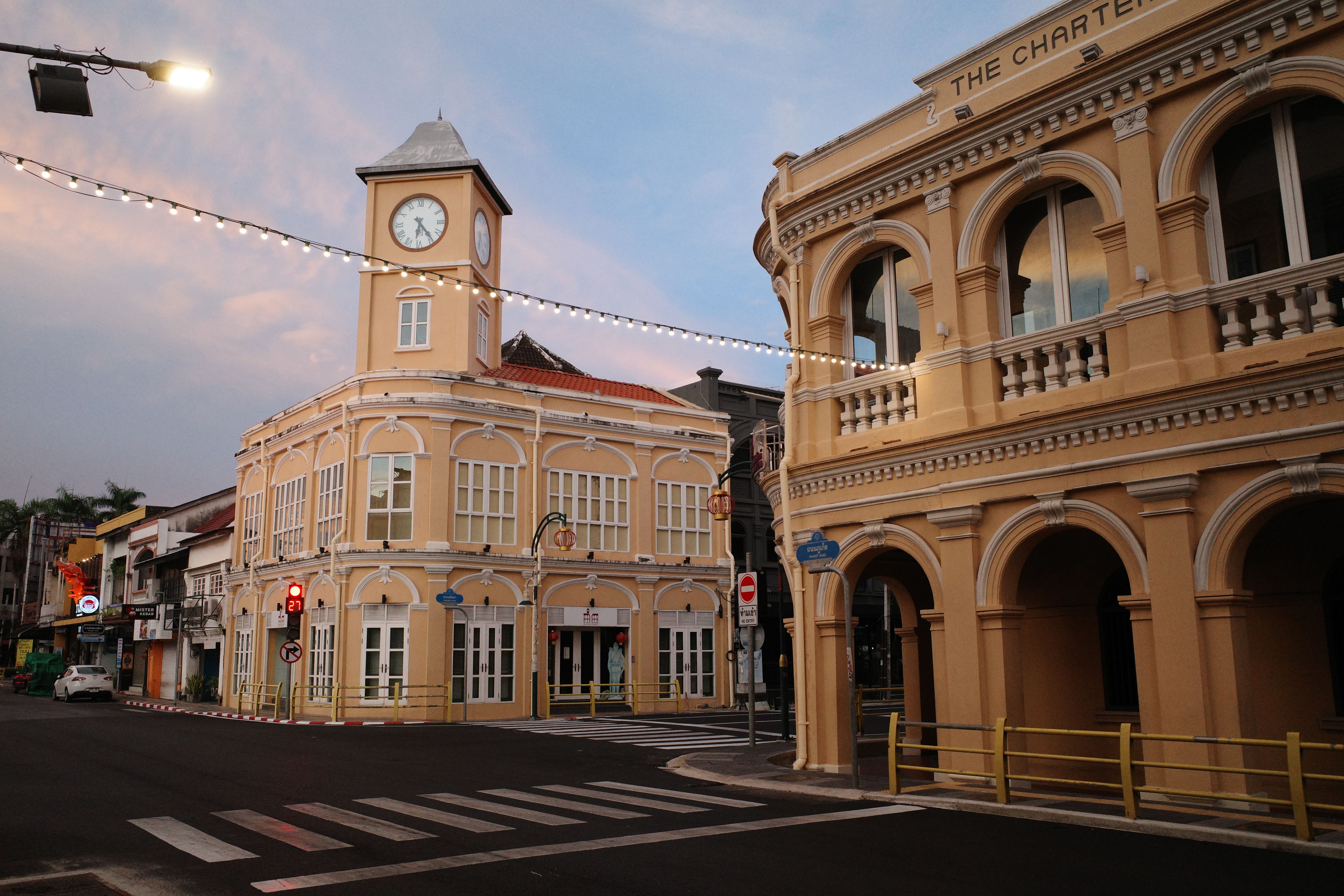
This is the part of Phuket most beach visitors never see, and it's the reason I keep coming back to the island. Phuket made its money from tin mining in the 19th century, and the Old Town is a few blocks of Sino-Portuguese shophouses left over from that era: pastel facades, shuttered windows, ornate doorways, all packed along Thalang Road and the streets around it.
It has been done up, so it's not undiscovered, but the restoration is tasteful and the area is full of good independent cafes, local restaurants, street art, and small shops rather than the souvenir tat of the beach strips. The Sunday Walking Street market (Thalang Road, late afternoon into the evening) is one of the better town markets in the south, with real local food rather than the tourist version. An afternoon and evening here is more interesting than another day on the beach.
Day trips to the islands
The day trips are where Phuket earns its keep, because it's the main launch point for the islands of the Andaman.
The Phi Phi Islands are the famous one. Maya Bay (the beach from The Beach) reopened with visitor limits after being closed to recover, and a full-day speedboat tour from Phuket takes in Maya Bay, snorkelling stops, and Phi Phi Don for lunch. It's beautiful and it's busy, in equal measure. Go with realistic expectations about crowds.
Phang Nga Bay is the better trip in my opinion. This is the bay of vertical limestone islands north of Phuket, including the so-called James Bond Island. The bay is calmer and stranger than the open-sea islands, and the sea-cave kayaking, where you're paddled through low caves into hidden lagoons inside the islands, is genuinely memorable. If you'd rather see this corner of the bay without the day-trip crowds, Koh Yao Yai sits right in the middle of it.
The Similan Islands, further north, have the best diving and snorkelling water in the region, but they're only open roughly mid-October to mid-May and are a longer trip. Worth it if clear water is your priority and the season lines up.
Food
Ignore the seafood platters lined up on ice outside the beach-strip restaurants in Patong and Kata. They're priced for tourists and the quality is inconsistent. The good eating on Phuket is in the Old Town and in the local markets.
Phuket has its own food identity, partly because of the Hokkien Chinese heritage. Look for Hokkien mee (a stir-fried yellow noodle dish), moo hong (slow-braised pork belly), and the local breakfast dish of dim sum, which is more of a thing here than elsewhere in Thailand. The Old Town restaurants do these properly. For markets, the Sunday Walking Street and the local fresh markets beat anything on the beach road.
Best time to go
Phuket is on the Andaman coast, so its seasons run opposite to the Gulf islands like Koh Samui. The dry season is roughly November to April: reliable sun, calm water, and the conditions that make the boat trips worthwhile. December to February is peak season, busiest and priciest but the most dependable weather.
May to October is the wet season. Rain tends to come in heavy bursts rather than all day, and the island stays fully open and much cheaper, but the sea on the west coast gets rough, the famous beaches can fly red flags, and the offshore boat trips are less reliable. The rip currents on Phuket's west-coast beaches in the wet season are no joke and people drown every year ignoring the red flags, so take them seriously.
Phuket works if you treat it as a base rather than a single beach. Pick the right stretch of coast for the kind of trip you want, spend at least an evening in the Old Town, and use the island for the day trips it's well placed for. If you're combining it with the rest of the region, the Krabi travel guide covers the next stop along the coast, and the first trip to Thailand checklist covers what to sort before you fly.